

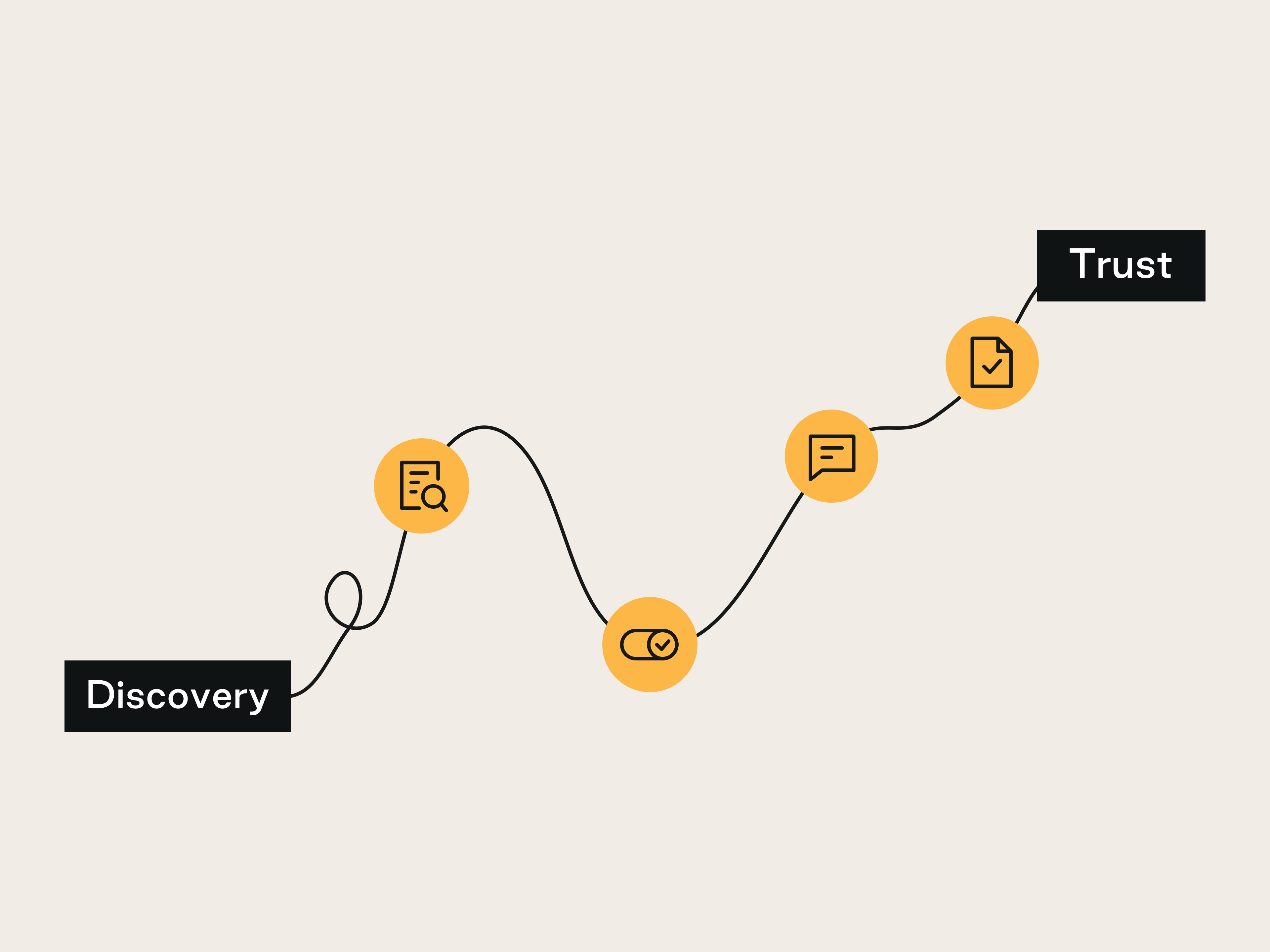
Handing over a household job you’d normally take care of yourself involves a small leap of faith.
You need to believe that whoever you’re passing it to is competent, understands what matters to you, knows what not to do, and will tell you if something goes wrong. That’s true whether you’re asking your partner to sort the broadband or trusting an AI agent to find you a new car insurance deal.
At Nous, we’re building a household AI agent that takes responsibility for the tedious but important admin that consumes people’s time and money.
Building an agent that can do the work is one challenge. Giving people the confidence to hand it over is another.
As a designer, I spend a lot of time thinking about what makes that handover feel clear and comfortable. The details matter: the words we use to ask for permission, how we explain a recommendation, what we say has happened, and when we ask someone to get involved again.
Each of those decisions helps someone understand what they can rely on us to do.
Enough information to make a decision
Take energy bills.
When Nous looks after a household’s energy, we start by understanding what they’re currently paying and the deal they’re on. Then we work out whether there’s a better alternative and handle the switch.
A message saying “we’ve found you a cheaper deal” leaves a lot unanswered.
How did you pick it? Have you accounted for exit fees? Will I have to do anything? Are you recommending something for me to sort out, or are you taking care of it?
Answering those questions is part of the work. But so is deciding how much information to put in front of someone.
If a person has to become an energy expert to assess our recommendation, we’re leaving too much of the job with them. They need a clear explanation of why the deal makes sense for their household, the trade-offs that matter, and what happens next. More detail should be there when they want it.
The aim is to give someone enough understanding to make a decision they’re comfortable with, without creating another research project.
Making the handover clear
The moment someone gives Nous permission to act is particularly important. A generic “continue” button can leave too much open to interpretation.
For an energy switch, are they asking us to move them onto this particular tariff? Or are they giving us responsibility for keeping their energy costs down, including making future switches within agreed limits?
Those are different agreements. The language and controls need to make that difference obvious, including how someone can change their instructions later.
There’s a balance to strike here. Ask for approval at every step and managing the agent becomes another household chore. Act beyond what someone understood they were handing over and their confidence can disappear just as quickly.
We need to agree enough up front for useful work to happen, then ask again when we reach a meaningful boundary.
That might be a commitment outside the agreed scope, an important piece of missing information, or a trade-off that needs the household’s judgement. When we interrupt, we should explain why their input matters and what their answer will allow us to do.
Taking responsibility through to the outcome
The same care matters after permission has been given.
A household needs to understand whether a switch has been requested, is underway, or has actually completed. Those distinctions affect whether someone can stop thinking about the job.
If something gets stuck, the agent should explain what happened, what has already changed, and who is responsible for the next step. If the person needs to get involved, they should have enough context to help without starting again.
For me, this makes trust a responsibility shared across design, engineering, operations and the business itself. The interface makes promises; the whole service has to keep them.
The experience we’re working towards is one where a household hands over a job, sees it handled properly, and feels the relief of having less to keep track of. That experience gives them a reason to hand over more.
That’s what “life after admin” should feel like: knowing things are being looked after, knowing you can change your instructions, and being free to get on with your day.